Ever considered the impact of a dirty air filter in your AC system? You might dismiss it as a minor detail, but it’s more significant than you might think. When neglected, these filters can become a breeding ground for allergens, pollutants, and even harmful bacteria. These unseen foes can infiltrate your home’s air, potentially triggering allergies, worsening respiratory conditions, and even promoting mold growth. But how exactly does this happen, and what can you do to protect your health? Let’s explore these pressing questions together.
Understanding Your AC’s Air Filter
To begin with, it’s essential to understand that your AC’s air filter plays a key role in maintaining the efficiency and cleanliness of your cooling system. The air filter’s primary function is to sift out the dust, pollen, and other particulates that can clog the system’s inner workings, reducing its effectiveness and potentially causing damage.
You might think of your air filter as the gatekeeper of your AC system. When it’s clean, it allows easy passage of air through the system, ensuring ideal cooling. However, it restricts airflow and forces your AC to work harder than necessary when it becomes dirty. This reduces your unit’s efficiency and increases your energy costs.
Moreover, a dirty air filter can negatively impact the air quality in your home. It can’t effectively remove pollutants from the air, leading to an accumulation of dust and allergens. This can trigger allergies, cause respiratory problems, and even lead to more serious health issues.
In short, paying attention to your AC’s air filter is about more than maintaining your system’s efficiency; it’s about safeguarding your health and well-being.
The Role of Air Filters in AC Systems
The air filter is essential to your AC system’s efficient operation and indoor air quality. This component actively traps and removes airborne particles such as dust, pollen, and other pollutants, preventing them from circulating in your living or workspace.
The air filter also safeguards the components of your AC system. It captures particles and prevents them from building up on the evaporator coil and other mechanisms within the system. This buildup can impede airflow, cause the system to work harder, increase energy usage, and ultimately shorten the lifespan of your AC system.
However, the air filter can become clogged with the particles it collects over time. When this happens, air can’t pass through as easily, which decreases your system’s efficiency. This can lead to higher energy bills and compromised indoor air quality.
Symptoms of a Dirty Air Filter
Spotting a dirty air filter isn’t rocket science; you’ll notice several telltale signs that your AC system’s efficiency is compromised. The most obvious symptom is a significant decrease in the cooling capacity of your AC unit. You might feel it’s taking longer than usual to cool down a room, or the air coming out isn’t as cold as it should be.
Another symptom is a sudden surge in your electricity bills. A dirty filter forces your AC system to work harder, using more power and resulting in higher energy costs. If you’ve noticed an unexplained increase in your utility bills, it might be time to check your filter.
You may also notice more dust accumulation around the vents and in the room. A dirty filter can’t effectively trap and remove dust particles, leading to poor air quality indoors. A stale or musty odor from your AC vents can often accompany this.
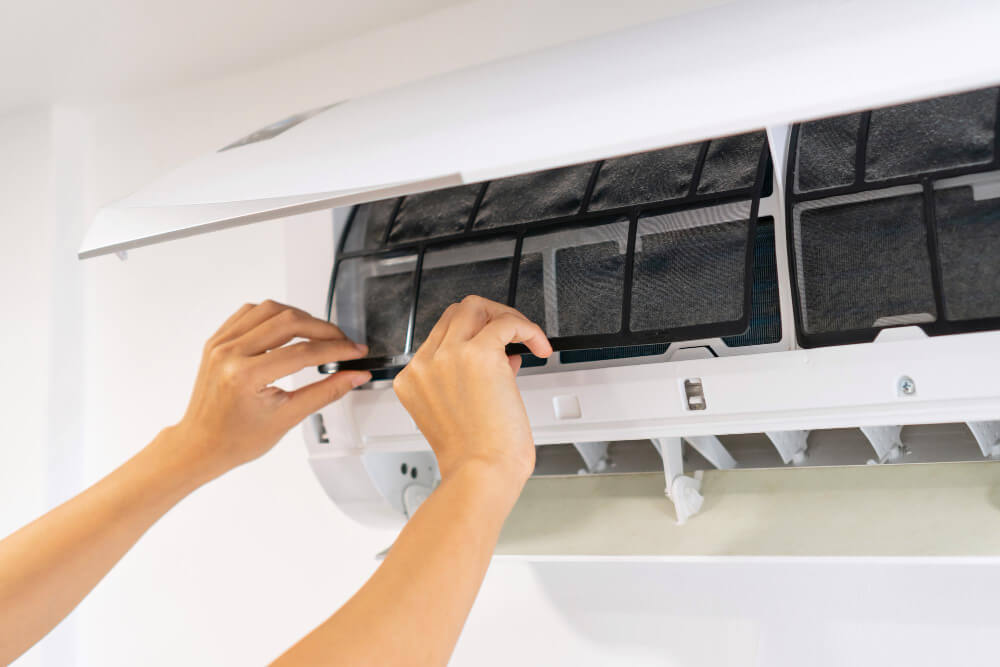
Lastly, the filter itself will appear visibly dirty or clogged. If it’s grey in color and coated with dust, it’s a clear sign that it needs to be replaced. Ignoring these symptoms could lead to more serious issues down the line.
How a Dirty Air Filter Affects Health
While it’s clear that a dirty air filter compromises your AC system’s efficiency and increases energy costs, you might not realize the health implications tied to this seemingly minor issue. A clogged filter can’t effectively remove pollutants, allowing them to circulate in indoor air. This can negatively affect your health, especially if you’re prone to allergies or have respiratory issues.
When an air filter is dirty, it can’t trap particulates as efficiently as it should. This means dust, pollen, pet dander, mold spores, and other allergens may be continuously recirculated through your home. Prolonged exposure to these irritants can lead to allergy flare-ups and worsening of asthma and other respiratory conditions.
Moreover, a dirty air filter creates an environment conducive to mold growth. Mold spores can lead to various health issues, from allergic reactions to serious respiratory infections. Additionally, certain types of mold produce mycotoxins, which can have serious health impacts, especially in individuals with weakened immune systems.
To keep your indoor air healthy, it’s essential to regularly check and replace your AC filter. This simple act not only guarantees your system’s efficiency but also safeguards your health.
Indoor Air Quality and Your Health
Considering the direct link between indoor air quality and your health, it is vital to understand the potential risks of poor air quality and how to mitigate them. Poor indoor air quality can lead to a host of health issues, including respiratory problems, headaches, and fatigue. It’s not just about discomfort; prolonged exposure to polluted indoor air can even cause chronic diseases like asthma or heart disease.
The primary contributors to poor indoor air quality are pollutants like dust, mold spores, and chemical fumes. These can originate from various sources such as cleaning products, building materials, and even your HVAC system if it is not well-maintained. Here, your air filter plays an important role. When your air filter is clean, it effectively traps these pollutants, ensuring the air you breathe is clean. But if it is dirty, it can’t perform its job well, leading to poor indoor air quality.
Maintaining good indoor air quality is vital to protecting your health. Regularly clean and replace your air filters, guarantee proper ventilation, and consider using air purifiers. Remember, a healthier indoor environment leads to better overall health.
The Link Between Allergies and Dirty Air Filters
You might not realize it, but a dirty air filter in your HVAC system can greatly exacerbate allergy symptoms. These filters can accumulate dust, pollen, and other allergens throughout your home. If you’re particularly sensitive to these irritants, breathing in this recycled air might trigger your allergies.
It’s important to understand how a dirty air filter can affect your health:
- Increased Allergen Exposure: A clogged filter won’t efficiently remove allergens from the air, increasing your exposure.
- Poor Indoor Air Quality: With the filter unable to do its job, indoor air quality will deteriorate.
- Allergy Symptom Exacerbation: A dirty air filter can worsen your symptoms if you suffer from allergies.
- Weakened Immune System: Constant exposure to allergens can weaken your immune system over time.
Maintaining clean air filters is vital to maintaining your HVAC system. Not only will it guarantee your system’s efficiency, but it’ll also help you breathe easier and reduce your allergy symptoms. Remember, a clean filter means cleaner air and a healthier you.
Health Risks Posed by Mold and Bacteria
Dirty air filters in your HVAC system can harbor harmful mold and bacteria, posing significant health risks to you and your family. These microorganisms can thrive in a dirty air filter’s damp, dark environment, spreading through your home every time the system operates.
Exposure to these pathogens can result in a host of health problems. The most common are respiratory issues such as asthma and allergies. You might experience symptoms like coughing, wheezing, and shortness of breath. Prolonged exposure can even lead to more severe conditions such as pneumonia and bronchitis.
Mold can also produce mycotoxins, toxic substances that can lead to neurological problems and, in extreme cases, death. Symptoms of mycotoxin exposure include headaches, fatigue, and problems with memory and concentration.
Bacteria, on the other hand, can cause infections in the respiratory tract. They can lead to sinusitis, tonsillitis, and ear infections. Some types of bacteria found in air filters can also cause Legionnaire’s disease, a severe type of pneumonia.
In short, a dirty air filter isn’t just a minor inconvenience. It’s a serious health risk that requires your immediate attention.
Importance of Regular Air Filter Maintenance
Given these significant health risks, it’s clear why maintaining your air filter regularly is not an option but a necessity. Regular maintenance keeps your air conditioning system running effectively, which can save you money on energy costs and prevent costly repairs or replacements. It also guarantees the air you breathe is clean, reducing the risk of respiratory diseases and allergies.
Consider the following benefits of regular air filter maintenance:
- Maintains ideal airflow: A clean filter allows your AC system to operate at peak efficiency, reducing energy consumption and lowering utility bills.
- Prolong system lifespan: Regularly replacing your filter can prevent damage to your AC system, extending its useful life and saving you money in the long run.
- Improves indoor air quality: A clean filter removes pollutants, allergens, and germs from the air, reducing the risk of respiratory illnesses and allergies.
- Reduces environmental impact: By operating more efficiently, your AC system uses less energy and contributes less to greenhouse gas emissions.
Changing Your Air Filter: A Simple Guide
Let’s explore the straightforward process of changing your air filter, a critical task for maintaining the efficiency and longevity of your AC system. It’s a relatively simple job you can handle without professional help, saving you time and money.
First, you’ll need to purchase the right replacement filter. Check your system’s manual or the label on your existing filter for size information. You’ll also want to consider the filter’s MERV rating, which indicates its ability to trap particles.
With your new filter ready, turn off your AC system to guarantee safety. Remove the old filter, typically located behind a return air grille or in your system’s indoor unit. There may be screws or clips holding the filter in place—be sure to keep track of them.
Insert the new filter, paying attention to airflow direction indicators on the filter frame. These should align with the arrows on your system. Secure the filter with the screws or clips you removed earlier.
Pro Tips to Keep Your Air Filter Clean
Now that you know how to change your air filter, we’ll offer expert advice on keeping it clean to guarantee peak AC performance. Your filter’s cleanliness directly impacts the air quality and the efficiency of your system. So, to ascertain you’re serving your family or clients the best, follow these pro tips:
- Check your filter regularly. If it’s dirty, change it. Don’t wait until it’s completely clogged.
- Use a high-quality air filter. It might cost a bit more, but it’ll screen out more impurities and last longer.
- Clean your home or office regularly. Less dust and dirt in the space means less for the filter to handle.
- Maintain your AC system. Regular upkeep helps your filter and system work better and longer.
Conclusion
Remember, an ounce of prevention is worth a pound of cure. Don’t let a dirty air filter compromise your health or your AC’s efficiency. Stay alert for signs of a clogged filter and prioritize regular maintenance. Changing your filter is straightforward and essential for ensuring clean, healthy air. So, keep it clean, breathe easy, and let your AC system do its job properly. After all, your health and comfort are worth it.