
Key Points
- A dirty air filter allows allergens, mold spores, and bacteria to circulate through your home
- Clogged filters reduce AC efficiency and drive up monthly energy costs
- Homeowners with allergies or respiratory conditions are most vulnerable to poor filter maintenance
- Most filters should be replaced every one to three months depending on household conditions
- Professional AC maintenance includes filter inspection and replacement as part of every visit
Working in homes across the region, our technicians find clogged or neglected air filters more often than any other maintenance issue, and the consequences go well beyond reduced cooling performance. A filter that has not been replaced on schedule does not just restrict airflow. It becomes a source of the very pollutants your HVAC system is supposed to remove. Scheduling regular air filter replacement is one of the simplest and most impactful steps a homeowner can take to protect both their system and their health.
What Your AC’s Air Filter Actually Does
An air filter’s primary job is to capture airborne particles before they pass through the HVAC system. Dust, pollen, pet dander, and other contaminants are pulled into the return air stream and trapped in the filter media before the conditioned air is pushed back into the living space. When the filter is clean, this process happens efficiently and continuously.
When the filter becomes clogged, airflow through the system is restricted, forcing the blower motor to work harder to maintain circulation. This increases energy consumption, accelerates wear on system components, and allows unfiltered air to bypass the filter entirely. The result is both a less efficient system and progressively worse indoor air quality throughout the home.
Signs Your AC Air Filter Needs to Be Replaced
A deteriorating filter gives clear signals before it becomes a serious problem. Catching these signs early prevents the downstream health and efficiency issues that come with prolonged neglect. According to the U.S. Environmental Protection Agency, indoor air can be two to five times more polluted than outdoor air, and a clogged filter is one of the primary contributors in homes with central HVAC systems.
Common signs that a filter needs immediate replacement include:
- Reduced cooling output: The system takes longer than usual to reach the set temperature
- Rising energy bills: An unexplained increase in monthly utility costs despite no change in usage habits
- Excess dust around vents: Visible dust accumulation on vent covers or nearby surfaces
- Musty or stale odors: Unpleasant smells coming from the vents when the system runs
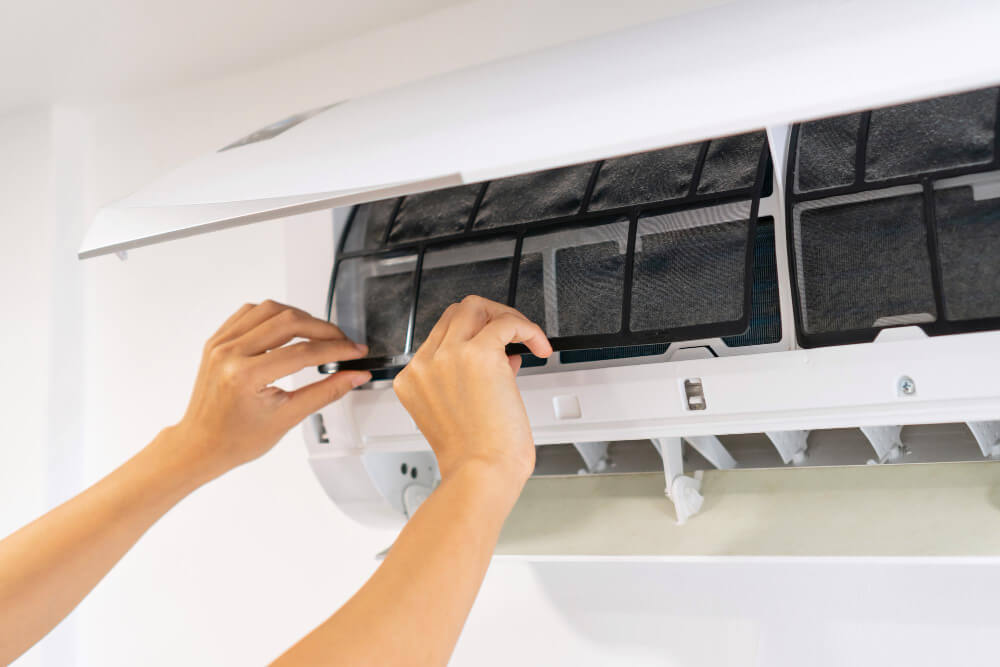
- Visibly dirty filter: A grey, clogged filter that is clearly past its useful life
How a Dirty Air Filter Affects Your Health
When a filter can no longer capture contaminants effectively, those particles recirculate through the home continuously. Dust, pollen, mold spores, and pet dander become a persistent presence in the indoor air, triggering allergy flare-ups and worsening asthma and other respiratory conditions. For households where someone already manages a chronic respiratory condition, a neglected filter can make symptoms noticeably worse within days.
Seasonal conditions compound the problem. During spring pollen season and the humid summer months, the volume of airborne particles entering a home increases significantly. A filter that is already past its replacement window has no capacity to handle that added load, leaving the indoor environment far more polluted than most homeowners realize.
Dirty Air Filters and Allergy Symptoms
A clogged filter does not just fail to clean the air. It actively contributes to worsening allergy symptoms by allowing recirculated irritants to build up over time. Homeowners who notice seasonal allergy symptoms persisting indoors, or worsening despite medication, often find that filter replacement provides meaningful relief.
The connection between filter condition and allergy symptoms is well established:
- Increased allergen exposure: A clogged filter allows pollen, dust mites, and pet dander to recirculate freely
- Deteriorating indoor air quality: Without effective filtration, pollutant levels rise steadily throughout the home
- Worsened respiratory symptoms: Continuous allergen exposure aggravates asthma, rhinitis, and sinus conditions
- Compounded sensitivity: Prolonged exposure to elevated allergen levels can increase sensitivity over time
Health Risks Posed by Mold and Bacteria
A dirty filter creates conditions where mold and bacteria can establish themselves and spread through the HVAC system. The combination of trapped organic debris and moisture in the air handler creates an environment where microbial growth becomes possible. Every time the system runs, those contaminants are distributed throughout the home.
Mold exposure can cause allergic reactions, respiratory infections, and in prolonged cases, more serious neurological effects from mycotoxin exposure. Certain bacteria found in neglected HVAC systems have been linked to conditions including Legionnaire’s disease, a severe form of pneumonia. Installing a UV light system alongside regular filter maintenance is an effective way to reduce microbial growth inside the air handler and protect household air quality year-round.
Why Regular Air Filter Maintenance Matters
Regular filter maintenance protects both the HVAC system and the people living in the home. A clean filter allows the system to operate at peak efficiency, reducing energy consumption and preventing the accelerated component wear that comes with restricted airflow. According to the U.S. Department of Energy, replacing a clogged filter with a clean one can reduce AC energy consumption by 5% to 15%.
Beyond efficiency, consistent filter maintenance is the foundation of healthy indoor air quality. Pairing regular filter replacement with a professional AC maintenance visit ensures the entire system is inspected, cleaned, and operating in a way that supports both comfort and household health throughout the year.
Protecting Your Home’s Air Quality Year-Round
Neglecting an air filter is one of the easiest maintenance mistakes to make and one of the most consequential. What starts as a minor reduction in airflow can gradually develop into a health issue, an efficiency problem, and ultimately a costly repair if the system is forced to compensate for restricted circulation over an extended period.
Our team is ready to help homeowners stay ahead of these issues with professional filter service and comprehensive HVAC care. Schedule your air filter service today and keep your home’s air clean and your system running at its best.
Frequently Asked Questions
How often should my air filter be professionally inspected?
Filter condition should be checked at every professional maintenance visit, and most filters require replacement every one to three months depending on household conditions.
What MERV rating is best for homes with allergy sufferers?
A MERV rating between 8 and 13 is generally recommended for allergy-sensitive households, balancing effective particle capture with adequate airflow.
Can a dirty air filter cause my AC to freeze up?
Yes. Restricted airflow from a clogged filter can cause the evaporator coil to drop below freezing, leading to ice buildup and a potential system shutdown.
Can mold from a dirty filter spread to other parts of my HVAC system?
Yes. Mold spores captured in a dirty filter can spread to the evaporator coil, drain pan, and ductwork if the filter is not replaced promptly.
Is there a difference between cheap and expensive air filters?
Higher-rated filters capture smaller particles more effectively but can restrict airflow in systems not designed for dense filter media. A technician can recommend the right filter type for your specific system.