

Flickering lights in your Hurricane, WV home are rarely just a minor annoyance. In most cases, they point to underlying electrical issues that deserve prompt attention. The most common causes include loose bulbs and faulty fixtures, circuit overloads, damaged or loose wiring, voltage fluctuations, and compatibility issues with dimmers or smart devices. Understanding what is behind the flicker helps you respond appropriately and avoid letting a manageable problem develop into a serious safety hazard.
At Best Virginia Heating and Cooling, we provide professional electrical outlet and switch repair to homeowners throughout Hurricane and the surrounding Putnam County area. Our team is available 24 hours a day, 7 days a week, so reliable help is always available when you need it.
Understanding Flickering Lights: Common Causes and Solutions
Flickering lights can stem from a surprisingly wide range of causes, ranging from something as simple as a loose bulb to something as serious as compromised wiring. Knowing the difference between a quick fix and a situation that requires professional evaluation is important for keeping your home safe.
Loose bulbs and faulty fixtures are at the straightforward end of the spectrum and are often easy to address. Circuit overloads and damaged wiring, however, represent more serious concerns that carry genuine safety risks if left unresolved. Voltage fluctuations, particularly during periods of high electrical demand, are another possibility worth investigating with your utility provider.
Light dimmers and smart devices can also introduce flickering if they are not properly compatible with the bulbs or fixtures they control. In our service calls throughout Hurricane, WV, we frequently find that homeowners have been tolerating flickering for longer than they should, not realizing that the underlying cause was something that needed professional attention rather than a simple settings adjustment. Staying alert to these signals and acting on them promptly is the most effective way to protect your home and your family.
Flickering Lights: Are You Overloading Circuits?
Circuit overloads are one of the more common causes of flickering lights, particularly in homes where multiple high-draw appliances share the same electrical line. When a circuit is pushed beyond its capacity, it struggles to deliver consistent power, and the result is often visible as flickering or dimming at light fixtures connected to that circuit.
High-demand appliances such as space heaters, air conditioners, and kitchen equipment are frequent contributors to this problem. Plugging too many devices into outlets on the same circuit compounds the issue quickly, especially during periods of peak usage.
The age of your home’s wiring is also a relevant factor. Many older homes in the Hurricane area were built with electrical systems designed to handle far less demand than modern households place on them. If you are regularly tripping breakers or noticing persistent dimming alongside the flickering, your electrical system may no longer be adequate for your current needs. Distributing electrical loads more evenly across multiple circuits can help in the short term, but if the problem persists, a professional assessment is the appropriate next step. An electrical panel replacement may be necessary if your current panel cannot safely support your home’s electrical demands.
Identifying and Replacing Faulty Light Bulbs
Before concluding that a flickering problem requires professional intervention, it is worth ruling out the simplest possible cause. A bulb that is not properly seated in its socket can produce intermittent flickering that mimics more serious electrical issues.
Start by checking each bulb in the affected area to confirm it is securely tightened. A bulb that looks dim or has a darkened area at the base is likely nearing the end of its life and should be replaced. When swapping bulbs, using the correct type and wattage for the fixture ensures proper compatibility and avoids creating new issues.
LED bulbs are energy-efficient and long-lasting, but it is worth knowing that some older dimmer switches are not fully compatible with LED technology and can produce flickering as a result. If you have recently switched to LED bulbs and flickering appeared shortly afterward, the dimmer switch may need to be updated to a model rated for LED use.
After replacing any suspect bulbs, monitor the affected lights over the following days. If flickering continues, the cause almost certainly lies elsewhere in the electrical system and warrants a closer look by a licensed electrician in Hurricane, WV.
Signs of Loose Wiring: When to Call for an Inspection
Loose wiring is a more serious cause of flickering lights and one that should not be left unaddressed. Connections that are not secure within the electrical system create resistance and inconsistency in power delivery, which shows up as flickering at the fixture level.
One telling pattern to watch for is flickering that appears specifically when certain appliances are turned on or when the electrical load on a circuit increases. This behavior suggests that the wiring is struggling to handle the demand, which points to a connection issue rather than a bulb or fixture problem.
More urgent warning signs include the smell of burning plastic near outlets or fixtures, scorch marks around outlet covers, or outlets that feel warm to the touch. Based on what we see in homes throughout the Teays Valley area and along Route 60 in Hurricane, WV, these symptoms indicate that immediate professional evaluation is necessary. Loose or deteriorating wiring is a leading cause of residential electrical fires, and catching it early through a proper inspection is far preferable to dealing with the consequences of ignoring it.
Regular attention to your home’s overall electrical health, including your backup power equipment, is equally important. Our generator repair services ensure your standby power systems are ready to perform reliably when the main supply is interrupted, which matters particularly during the storm seasons that affect the Hurricane area.
Quick Fixes for Flickering Lights: When to Call an Electrician
There is a reasonable set of checks a homeowner can perform when flickering lights first appear. Confirming that bulbs are securely seated, inspecting light switches for visible wear or damage, and checking whether the flickering is isolated to one area or affects multiple rooms all provide useful diagnostic information.
If tightening a bulb or replacing a worn switch resolves the problem, the issue was likely minor. However, if flickering persists after these basic checks, or if it is widespread across multiple circuits, the situation calls for professional evaluation rather than continued troubleshooting.
Flickering that accompanies other warning signs, such as tripped breakers, warm outlets, unusual odors, or discoloration around electrical fixtures, should be treated as urgent. These combinations of symptoms suggest that the electrical system has a problem that goes beyond surface-level fixes and that attempting further DIY investigation could introduce additional risk.
A licensed electrician can diagnose the root cause safely, make the necessary repairs, and confirm that your electrical system meets current code standards. Investing in a professional assessment when warning signs appear is always the more responsible and cost-effective path compared to waiting for a more serious failure.
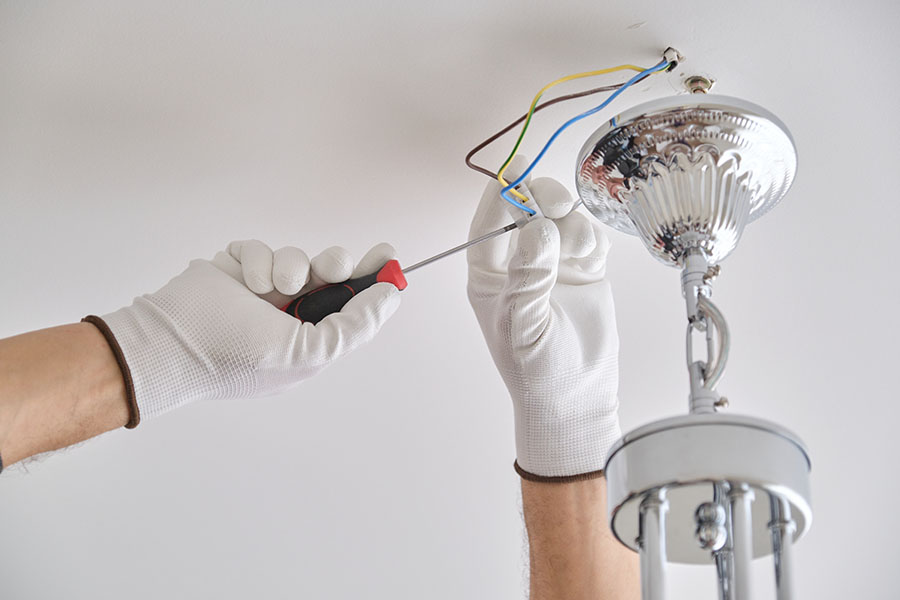
Keeping Your Hurricane Home Safe and Well-Lit
Flickering lights are your home’s way of signaling that something in the electrical system needs attention. Whether the cause turns out to be a loose bulb or a more significant wiring concern, the right response is always to investigate promptly rather than wait and hope the issue resolves on its own.
In our experience serving homeowners throughout Hurricane, WV, the families who act quickly when electrical warning signs appear consistently avoid the more serious and more expensive outcomes that come from delayed service. Our licensed technicians bring the expertise and equipment needed to identify the true source of the problem and resolve it correctly the first time.
Best Virginia Heating and Cooling is available 24 hours a day, 7 days a week, because electrical concerns do not wait for convenient hours. Contact our team today to schedule a professional electrical inspection and keep your home safe, comfortable, and properly lit.